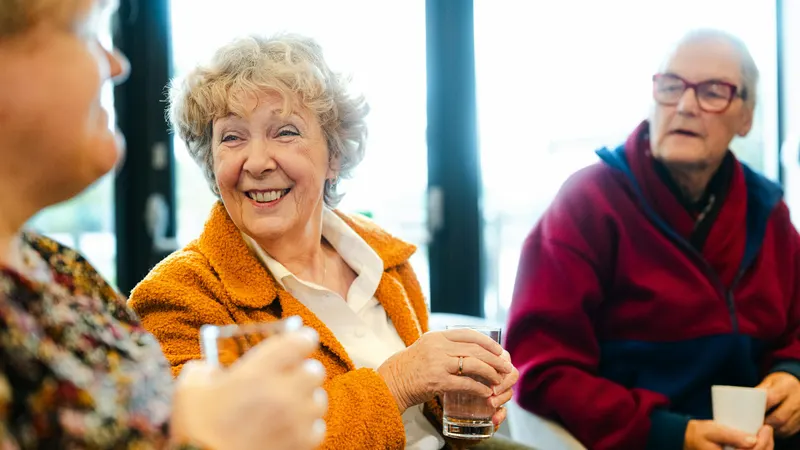
When people think about healthy aging, they usually think about exercise and diet. Fewer think about who they eat dinner with. Yet a growing body of research suggests that the strength of our relationships may be one of the quieter drivers of how well we age.
Is loneliness the same as social isolation?
Not quite, and the distinction is useful. Social isolation describes having few relationships or infrequent contact with others. It can be measured: how many people you see, how often, and how involved you are in groups. Loneliness is the subjective feeling of being alone or lacking the connection you want.
You can be isolated without feeling lonely, and you can feel lonely in a crowded room or a busy household. Research generally links both to worse health outcomes, including higher risks of cardiovascular problems, depression, and cognitive decline. As with most of this field, the evidence is largely observational, so it is hard to fully separate cause from effect. Poor health can also make people more isolated. Even so, the pattern has been consistent enough to draw attention from health authorities.
What did the Surgeon General say?
In 2023, the US Surgeon General issued an advisory on the public health concern of loneliness and isolation. It framed social connection as a health issue on par with other established risks, and it called for stronger community infrastructure, policies, and individual habits that make connection easier.
The advisory's core message is worth keeping in mind: connection is not a luxury. It is part of the foundation of health, and modern life, with its remote work, screens, and dispersed families, can quietly erode it.
What has the Harvard Study of Adult Development found?
The Harvard Study of Adult Development is one of the longest-running studies of adult life, following participants across many decades. One of its most cited takeaways is that the quality of people's relationships is linked to later-life health and well-being. In broad terms, people who felt more connected and more satisfied in their close relationships tended to fare better as they aged.
It is important to read that carefully. The study shows an association, not a guarantee, and it cannot prove that relationships alone cause longer lives. It also reflects the particular groups of people who took part. But it fits with the wider literature and gives a compelling reason to treat relationships as something worth tending.
Relationships are not a bonus feature of a healthy life. They are part of how a healthy life holds together.
Why might connection affect health?
Researchers point to several plausible pathways, none of which is fully settled.
- Stress. Supportive relationships may buffer the effects of chronic stress on the body.
- Behavior. Friends and family can nudge us toward walking, keeping appointments, and looking after ourselves.
- Purpose. Feeling needed by others is linked to a sense of meaning, which may support mental health.
- Early help. People with close contacts are more likely to have someone notice when something is wrong.
Does the number of friends matter?
Less than you might think. Most researchers emphasize quality over quantity. A few relationships in which you feel seen and supported are generally worth more than a large but shallow network. Types of connection also differ: close ties provide emotional support, while looser "weak ties," like neighbors, regulars at a coffee shop, or fellow class members, add everyday belonging.
If your circle has shrunk because of moving, retirement, a loss, or simply the busy years, that is very common. It is not a personal failing, and it can be rebuilt.
How can you build stronger ties in practice?
Willpower is a poor basis for a social life. Structure works better.
Make it recurring
Weekly or monthly commitments take away the constant burden of planning. A standing Sunday call, a monthly dinner, or a weekly class puts connection on the calendar.
Do something together
Activity-based connection can feel easier than open-ended socializing. Consider:
- A walking group or a regular walk with a neighbor. This pairs well with the movement habits in our guide to daily steps and longevity.
- Volunteering, which offers purpose and regular contact.
- Classes, clubs, or faith and community groups where you see the same people repeatedly.
- Shared meals, whether cooking with a friend or hosting a simple potluck.
Reach out first, and keep it small
A short message to an old friend, or an invitation for a coffee, is often welcomed more than we expect. Many people are waiting for someone else to make the first move.
Protect the time
Long stretches of screen time can crowd out in-person contact. Our look at digital detox and screen time offers ideas for making room. Video calls and messages do help when distance is a barrier, though many people find in-person contact more satisfying.
Start with what you already have
Before searching for new groups, look at the relationships already in your life. A neighbor you wave to, a former colleague, a cousin you have lost touch with: each is a thread that can be strengthened with a little consistency. Deepening an existing tie often feels less daunting than starting from scratch, and it tends to pay off sooner.
Be patient with the process
New friendships usually take repeated, casual contact before they feel close. If the first few meetings feel awkward, that is normal. Showing up several times in a row, rather than judging a single evening, is what tends to turn acquaintances into friends.
When should you seek extra help?
Persistent loneliness can feed low mood and anxiety. If you feel hopeless, withdrawn, or unable to enjoy anything for weeks, speak with a doctor or mental health professional. Older adults, or anyone facing a health condition or mobility limits, can ask local community centers, senior services, or their clinician about groups and transport options. Check with a clinician before starting a new physical activity group if you have a health condition.
The bottom line
Relationships appear to be one of the quieter foundations of healthy aging. Loneliness and isolation are different problems, both linked with poorer health, and the Harvard Study of Adult Development and the 2023 Surgeon General advisory both point to connection as worth prioritizing. You do not need a huge social circle; you need a few good relationships and some regular, low-pressure ways to see people. For the wider picture, see our longevity coverage.