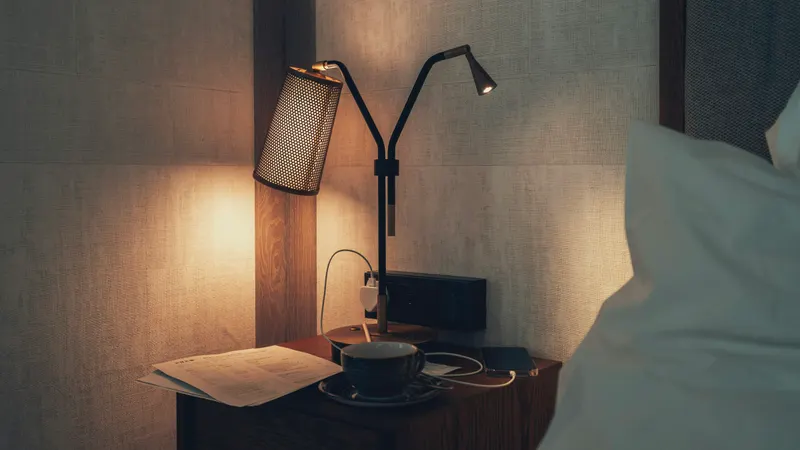
You would not expect to sprint straight from a full workday into deep sleep, yet many of us try exactly that. An evening routine gives your mind and body a runway, gradually lowering stimulation so that sleep comes more naturally.
The best routines are simple, repeatable, and tailored to your life. Here is how to build one that actually sticks.
Why does an evening routine help you sleep?
Sleep is not a switch. It is a transition, governed by your internal clock and by a rising drive to sleep the longer you have been awake. Stress, bright light, and mental activity late in the evening can work against that transition.
A routine helps in two ways. Physically, it lowers light and activity so your body can begin its nighttime shift. Psychologically, repeating the same steps in the same order builds an association: this is what happens before sleep. Over time, the cues themselves can start to make you feel drowsy.
To understand the timing side, see our explainer on circadian rhythms and sleep.
How long should your wind-down window be?
Many sleep specialists suggest setting aside roughly 30 to 60 minutes before bed for calming activities. There is no magic length. What matters is that it is protected, consistent, and enjoyable enough that you will keep doing it.
Ideas for the wind-down window:
- Light stretching or gentle yoga
- A warm shower or bath
- Reading a paper book or listening to quiet audio
- Preparing tomorrow's clothes, bag, or to-do list
- A few minutes of slow, relaxed breathing (our guide to breathwork for stress relief offers simple techniques)
Pair this with a consistent bedtime and wake time. Going to bed at roughly the same time each night, including weekends, reinforces your body clock. Adults should aim for at least 7 hours of sleep, according to the American Academy of Sleep Medicine and the Sleep Research Society, so count backward from your wake time to find your target.
What should you do about light and screens?
Bright light in the evening tells your brain it is still daytime. Dimming the lights in the last hour or two before bed is one of the easiest changes you can make.
- Switch from overhead lighting to lamps with warm, low-wattage bulbs.
- Keep screens farther from your face and lower the brightness in the evening.
- Consider a screen cutoff 30 to 60 minutes before bed if you can.
Light is only part of the story with screens. Stimulating content, such as work email, news, or social media feeds, can keep your mind buzzing regardless of brightness. If you scroll out of habit, our look at digital detox and screen time has practical ideas.
Your evening does not need to be perfect. It only needs to be quieter than your day.
How do you set up the bedroom for sleep?
Aim for a bedroom that is cool, dark, and quiet. Sleep organizations commonly point to these basics:
- Cool: Many people sleep best in a slightly cool room. A commonly cited range is roughly 60 to 67 degrees Fahrenheit, though comfort varies.
- Dark: Use blackout curtains or an eye mask, and cover or remove small glowing lights.
- Quiet: Earplugs or a fan for steady background sound can help if noise is a problem.
- Comfortable: A supportive mattress and pillows that suit your sleeping position make a difference.
Try to keep the bed for sleep and intimacy. Working or watching stressful shows in bed can weaken the link between bed and sleep.
What should you avoid in the hours before bed?
A few common habits can quietly undermine sleep:
- Caffeine. It stays active in the body for hours. Many people sleep better by stopping caffeine by early afternoon.
- Alcohol. It may make you feel drowsy at first, but it tends to fragment sleep later in the night.
- Large or heavy meals. Eating a big meal shortly before bed can cause discomfort. A light snack is fine if you are hungry. Our overview of macronutrient ratios for optimal energy touches on eating patterns more broadly.
- Intense exercise very late. Regular activity supports sleep, but some people find vigorous workouts close to bedtime too stimulating.
- Drinking lots of fluids right before bed, which may mean more bathroom trips.
What if your mind will not slow down?
Racing thoughts are one of the most common bedtime complaints. A simple technique is a worry dump: earlier in the evening, spend five to ten minutes writing down what is on your mind and any next steps you can take tomorrow. The goal is to get the thoughts out of your head and onto paper so they are not competing for attention at midnight.
Other calming options include relaxed breathing, progressive muscle relaxation, or listening to something quiet and low stakes.
What should you do if you cannot fall asleep?
Lying in bed frustrated can train your brain to associate the bed with wakefulness. A widely recommended rule of thumb is that if you have been awake for about 20 minutes, get up, go to another room, and do something calm in dim light, such as reading or gentle stretching. Return to bed when you feel sleepy. Avoid checking the clock repeatedly, which tends to raise anxiety.
If trouble sleeping happens often, do not simply push through. Cognitive behavioral therapy for insomnia, known as CBT-I, is considered the first-line, evidence-based approach for chronic insomnia, and it works on the thoughts and habits that keep sleeplessness going. A clinician or a trained sleep therapist can guide you.
Please also talk to a healthcare professional if you have persistent insomnia, loud snoring or gasping during sleep, or heavy daytime sleepiness. Those can be signs of sleep disorders such as sleep apnea, which routines alone cannot address.
The bottom line
A good evening routine is less about rules and more about rhythm. Protect a 30 to 60 minute wind-down, dim the lights, prepare a cool, dark, quiet bedroom, watch the timing of caffeine, alcohol, and late meals, and give your worries somewhere else to go. If you are still awake after about 20 minutes, get up and reset.
Pick two or three changes, keep them for two weeks, and see how you feel. For more ideas, browse our sleep coverage.